Toys
Although it is believed that children were not given much opportunity to play, there is much evidence to the contrary. Archaeological digs have discovered toys made from metal or wood, and many pictures from the medieval period display children playing anything from board games to physical sports.
All ages played with toys, as indicated by Cornish writer John Trevisa in 1398. He wrote that babies from noble families played with toys similar to the plastics toys used today such as rattles, referred to as ‘a child’s brooch’. Other toys included windmills, dolls, and figurines.
Also contrary to common knowledge, many toys were mass-produced. Metal toys were made in a mould and painted, and wooden toys carved and painted. The toy industry in England was thriving by 1300. For boys, the toys were often related to war, with toy soldiers on horseback discovered in London, and for girls, the toys were dolls, called a ‘poppet’ or ‘puppet’ during the time, and dressed with costumes.
Girls were also given metal tea sets containing cups, jugs, plates and cauldrons with tripods. Children also used to play with spinning tops, calling them ‘top’, ‘prill’, ‘spilcock’ and ‘whirligig’.
Games
There were made up games played without toys, such as ‘cherry-pit’ where cherrystones were rolled, flicked or thrown into a hole.
However, many children took games too far, copying adult actions. In 1400, after Henry IV overthrew Richard II, children in London gathered and nominated Kings among themselves and made war with each other, killing many.
A popular game during the time was football, played with a pig’s bladder, and with very few distinct rules, meaning games could get violent.
Fun fact: Did you know that the football season in Europe is during the winter because stuffed pigs bladders were used for footballs, and at the beginning of winter pigs were slaughtered creating an abundance of pigs bladders available for play.
Overall, children’s play included physical activity like sports, toys given to them by their parents such as dolls and figures, and board games. Through toys, parents sometimes tried to regulate their children and give them skills useful for later life occupations such as a soldier for boys.
However, these games could get out of hand, and allowing boys to have weaponry, although allowed for them to become good at fighting, could cause greater damage.
Banner Image top of page: http://merryfarmer.net/2012/07/medieval-monday-children-in-the-middle-ages/
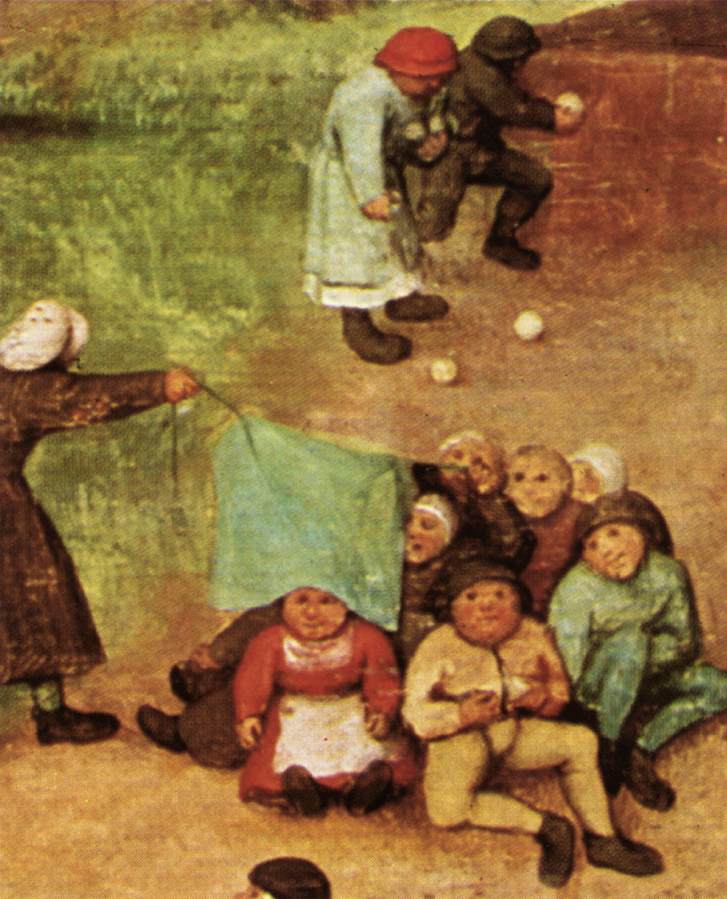


_-_WGA3349.jpg)