Literature for Children
Contrary to popular assumption, children were reading and had access to literature well before the Renaissance. Books available for children included texts that were written specifically for them, texts that were intended for both adults and children or texts that were written for adults and were read by children anyway. Medieval children’s literature falls into one of four categories: oral, didactic, narrative or dramatic.
Oral literature is the earliest form of literature children were exposed to and includes lullabies and Nursery rhymes. However, no lullabies or nursery rhymes survive from Medieval Europe.
- Educational literature is a broad categorisation of children’s texts, it may concern manuscripts, non-fiction books, fables, religious instruction or prayer books and some fiction. All Didactic literature was used with the intention of teaching some moral lesson to a child.
- Narrative literature was predominantly written for adults but was sometimes passed down to children. This is also a broad category, but concerns texts with an element of adventure; which may have included themes of romance, male heroism, exotic settings and fairy-tale endings. These often featured children as prominent characters.
- Dramatic literature concerns texts that were written for public performance, the most obvious example being plays. These can be considered children’s literature as they were performed to and read by children. However, schools would sometimes perform plays or songs, requiring children to read, study and participate in dramatic material.
- Reading was sometimes a gendered activity and sometimes not. Young women may not always have been sent to school, although many were still taught to read. Reading literature was a desirable quality in women in the later middle ages.
This is supported by the imagery that emerges depicting the Virgin Mary -whom was a symbol of feminine perfection- as reading literature. (SEE IMAGE Below to Right >http://www.english.cam.ac.uk/medieval/zoom.php?id=145)
Eleventh Century School
In the eleventh century, student's schools would not have their own buildings. Instead classes would be taken within the town monastery or a public building.
The schoolteacher would be a monk, nun or cleric who taught students as a side job. At this time only boys would be allowed in schools with girls having to learn within a nunnery or from a personal tutor.
Students could expect to take lessons in the Latin language and learn writing for a number of specialised purposes. However many children would not attend school so there was a large number of people in medieval times unable to read or write.
Fun Fact: The reason schools have a long break over summer is so that children in medieval times could help bring in the harvest.
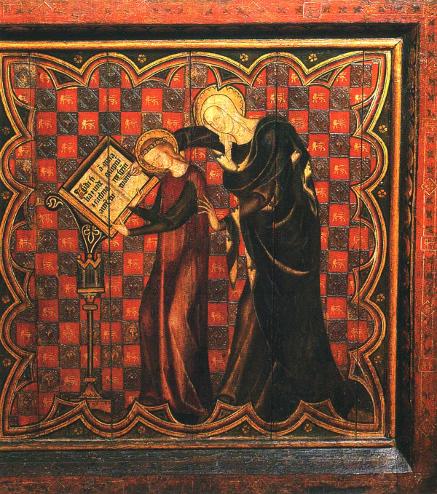
Above image:Virgin Mary learning to read (relevant to children’s literature section)http://www.english.cam.ac.uk/medieval/zoom.php?id=145
Schooling in the 13th Century
Finally in the 1200s did school become a recognized institution. Schools began to build their own buildings and teaching became a proper job.
Schools were still only for boys but become more widespread and more people were able to receive an education.
So what did these students study at school?
- First the children would attend song or reading schools where they would learn to say prayers and Latin songs. However the children often could not understand the words they were singing.
- After 2-3 years of song school a student would move into a specialist Latin grammar school in which they would learn to read and write Latin. They would read books like the Bible and Greek or Roman mythology. This schooling would last around 4 years.
- After finishing Latin school many students would leave school to begin working in order to earn money for their families. For the students lucky enough to continue schooling they could enrol in university and learn science, religion or further Latin studies.
Fun Fact: There were no age requirements within these schools so it was not uncommon for a 20 year old man to be studying in the same class as a number of 8 year olds!
Future after Schooling
Many Medieval Children went without formal schooling. Instead they were trained by parents or relatives to enter into a wide range of professions. These children may be sent away to relatives or family friends to become wards, where they would learn in a new environment.
Let’s examine a number of options available to these children:
Military - These children could be trained as knights by becoming a page or squire to an existing knight. They would serve their master both on and off the battlefield learning how to fight, act in a courteous manner and hopefully become a recognized knight in time.
Farming - Many of the poorer children would have to help their families by working in the fields with crops or animals. These children would be taught how to manage the farm in order to take over from their parents or begin their own.These farms were found all around the countryside and were likely worked by a majority of the population.
Craftsmen - Many children would choose to become craftsmen in a range of areas from woodworking to goldsmithing. One would have had to apprentice for many years in order to learn the ins and outs of such a profession. These craftsmen would often live in larger towns and this may be more exciting than the villages. This is just a small number of the wide and varied professions to be found within medieval times. Obviously a person’s wealth, background and social standing would have an effect on their future, but the medieval child often had some say in their future.

